Cambridge IGCSE Physics · 0625
Chapter 1: Motion, forces and energy — Part 8
Topic 1.6 · Momentum
Momentum and impulse
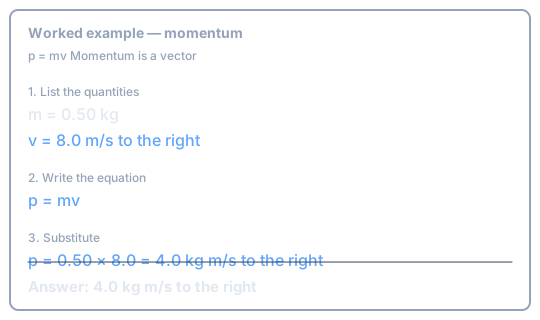
Momentum p = mv. Unit: kg m/s. Momentum is a vector — give a direction (or use + and − in one dimension).
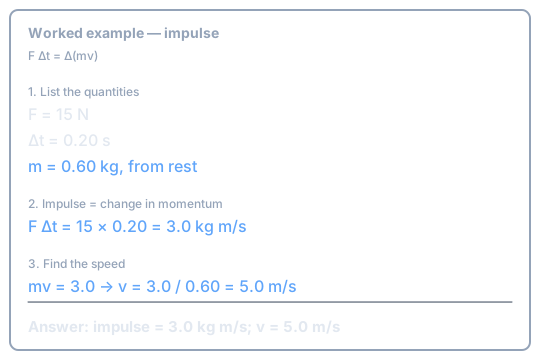
Impulse = force × time for which the force acts = FΔt = Δ(mv). Impulse equals change in momentum.
A 0.50 kg ball moves at 8.0 m/s to the right. Calculate its momentum.
A resultant force of 15 N acts on a 0.60 kg object for 0.20 s, starting from rest. Calculate the impulse and the speed reached.
Conservation of momentum
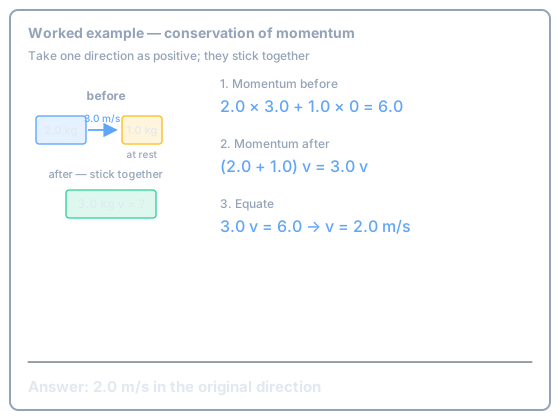
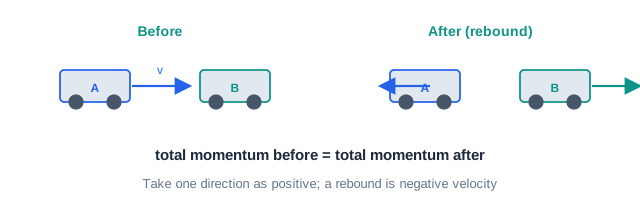
In a closed system (no external resultant force), total momentum is conserved in one dimension.
total momentum before = total momentum after. Take one direction as positive.
A 2.0 kg trolley moving at 3.0 m/s collides with a 1.0 kg trolley at rest. They stick together. Calculate their speed after the collision.
Resultant force is also the change in momentum per unit time: F = Δp / Δt.
0/10