Cambridge IGCSE Physics · 0625
Chapter 1: Motion, forces and energy — Part 11
Topic 1.7.3 · Energy resources
How useful energy is obtained
Describe how useful energy (often electrical power) is obtained from:
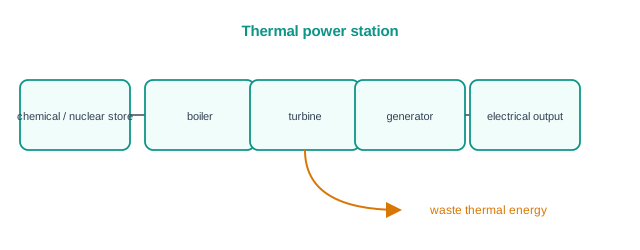
- Fossil fuels and biofuels — chemical store; typically boiler → turbine → generator.
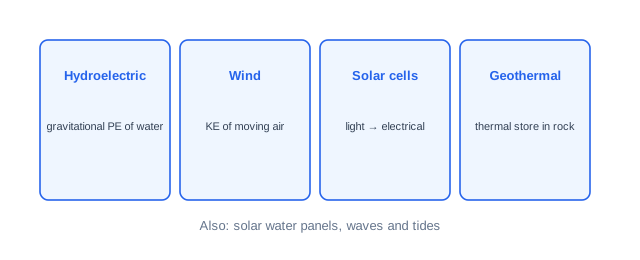
- Water — waves, tides, and water behind hydroelectric dams.
- Geothermal resources.
- Nuclear fuel — nuclear store; boiler/heat exchanger → turbine → generator.
- Solar cells — light from the Sun to electrical power (no turbine).
- Solar panels — infrared and other EM waves from the Sun heat water; the Sun also drives wind.
Where a boiler, turbine and generator are used, name those stages.
Advantages and disadvantages
Compare methods using renewability, availability, reliability, scale and environmental impact (e.g. fossil fuels reliable but non-renewable and polluting; wind renewable but variable; nuclear large-scale but radioactive waste; hydroelectric reliable where geography allows but floods land).
Efficiency of energy transfer can be described qualitatively (not all input energy becomes useful output).
The Sun, fusion and efficiency equations
Radiation from the Sun is the main source of energy for all our resources except geothermal, nuclear and tidal.
Energy is released by nuclear fusion in the Sun. Research continues into using fusion to generate electricity on a large scale on Earth.
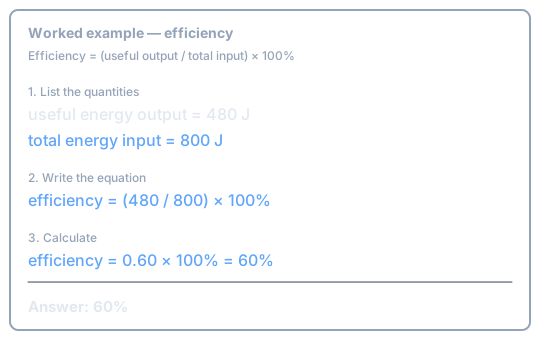
Efficiency = (useful energy output / total energy input) × 100%
or (useful power output / total power input) × 100%.
A motor is supplied with 800 J of electrical energy. It transfers 480 J usefully to a kinetic store. Calculate the efficiency of the motor.
0/10