Ad Banner Placeholder
Cambridge IGCSE Physics · 0625
Chapter 1: Motion, forces and energy — Part 13
Topic 1.8 · Pressure
Pressure
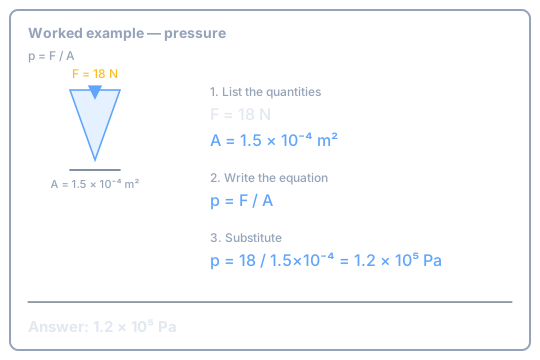
Pressure is force per unit area. p = F / A. Unit: pascal (Pa). 1 Pa = 1 N/m2.
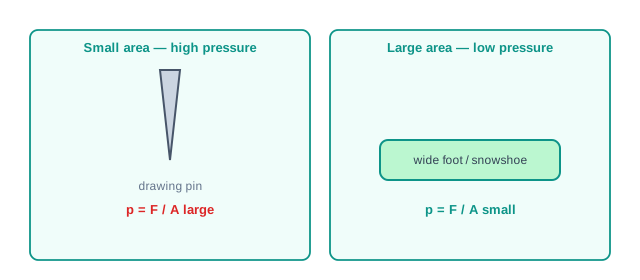
A large force on a small area gives high pressure (drawing pin, knife edge). The same force on a large area gives low pressure (snowshoes, wide tyres).
A drawing pin is pushed with a force of 18 N. The point has area 1.5 × 10⁻⁴ m2. Calculate the pressure at the point.
Pressure in a liquid
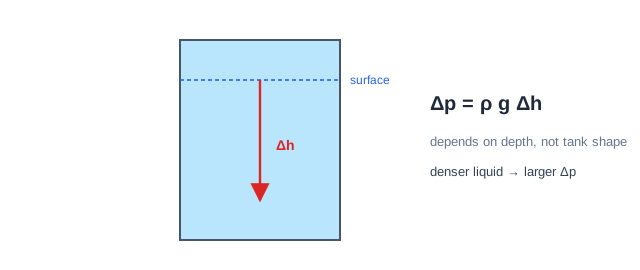
Qualitatively, pressure beneath the surface of a liquid increases with depth and is greater if the liquid is denser.
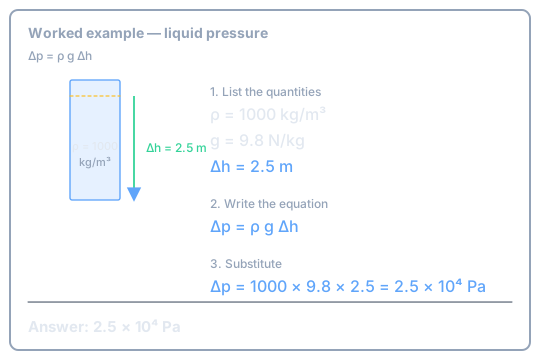
Recall and use Δp = ρgΔh for the change in pressure at depth Δh in a liquid of density ρ.
Calculate the extra pressure 2.5 m below the surface of a lake. Density of water = 1000 kg/m3. Take g = 9.8 N/kg.
0/10
Ad Banner Placeholder