Ad Banner Placeholder
Cambridge IGCSE Physics · 0625
Chapter 2: Thermal physics — Part 3
Topic 2.2.1 · Thermal expansion of solids, liquids and gases
Expansion at constant pressure
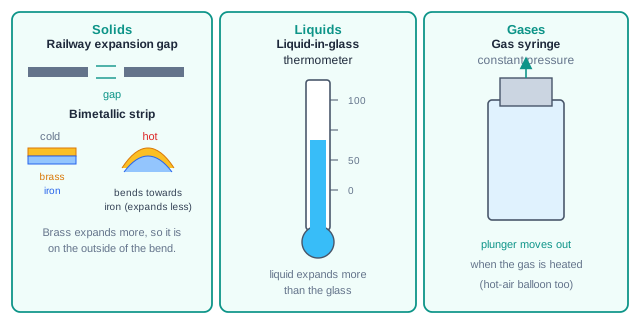
Solids, liquids and gases expand when heated (at constant pressure for gases).
Everyday consequences: bridges and railway rails need gaps or expansion joints; a bimetallic strip bends because the two metals expand by different amounts; liquid-in-glass thermometers; a hot-air balloon or a gas syringe.
Why gases expand most
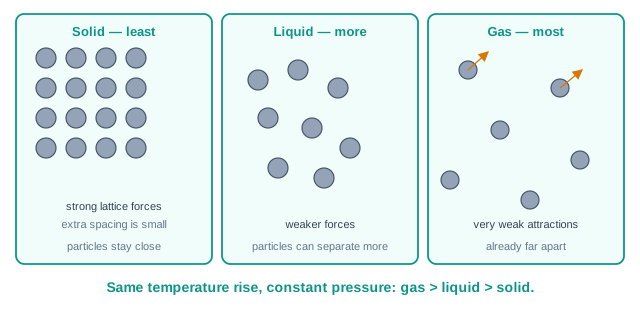
On heating, particles move faster and, on average, move further apart if they can.
Order of expansion for the same temperature rise (constant pressure for the gas): gas > liquid > solid. Solids are held in a strong lattice so the extra separation is small. Gas particles are weakly attracted and already far apart, so volume increases most.
0/10
Ad Banner Placeholder