Cambridge IGCSE Physics · 0625
Chapter 2: Thermal physics — Part 4
Topic 2.2.2 · Specific heat capacity
Internal energy and temperature
A rise in temperature of an object increases its internal energy.
An increase in temperature means an increase in the average kinetic energy of all the particles in the object.
Defining specific heat capacity
Specific heat capacity c is the energy required per unit mass per unit temperature increase.
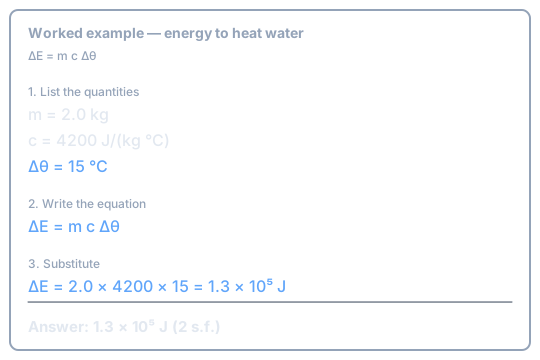
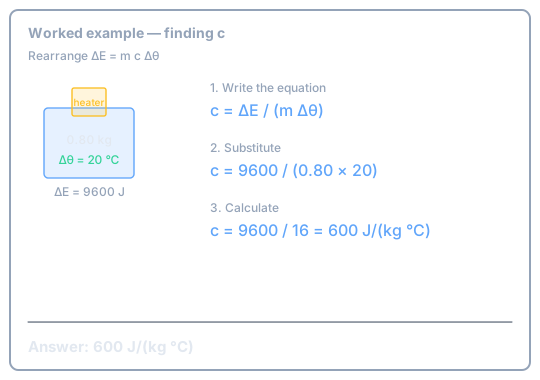
c = ΔE / (m Δθ) so ΔE = mcΔθ
Unit: J/(kg °C) or J/(kg K).
How much energy is needed to raise the temperature of 2.0 kg of water by 15 °C? c of water = 4200 J/(kg °C).
A 0.80 kg metal block is heated with 9600 J and its temperature rises by 20 °C. Calculate the specific heat capacity of the metal.
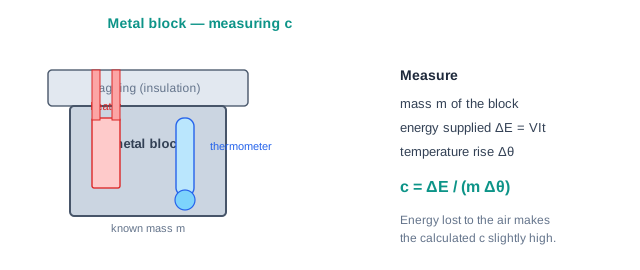
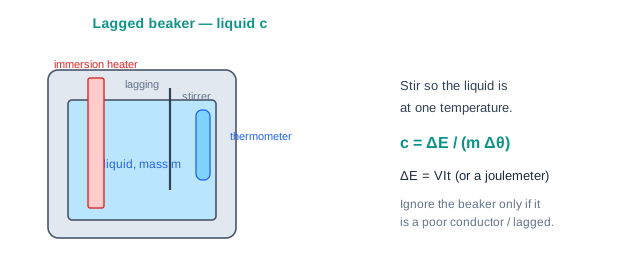
Measuring c
Solid: known mass, insulated, heater of known energy input (for example VIt), measure temperature rise.
Liquid: known mass in a lagged container, immersion heater, stir, measure temperature rise. Energy lost to the surroundings means the calculated c is often slightly high, because we assume all supplied energy heated the sample.
0/10