Cambridge IGCSE Physics · 0625
Chapter 2: Thermal physics — Part 5
Topic 2.2.3 · Melting, boiling and evaporation
Melting and boiling
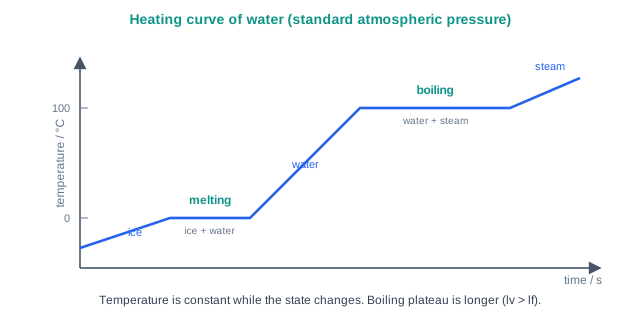
During melting and boiling, energy is supplied but the temperature stays constant. The energy is used to break attractive forces between particles, not to raise KE.
At standard atmospheric pressure, water melts at 0 °C and boils at 100 °C.
Condensation, solidification and evaporation
Condensation: gas particles lose energy, move slower, and attractive forces pull them into a liquid.
Solidification (freezing): liquid particles lose enough energy to lock into a solid arrangement.
Evaporation: more-energetic particles escape from the surface of a liquid. The remaining particles have lower average energy, so the liquid cools.
Boiling versus evaporation
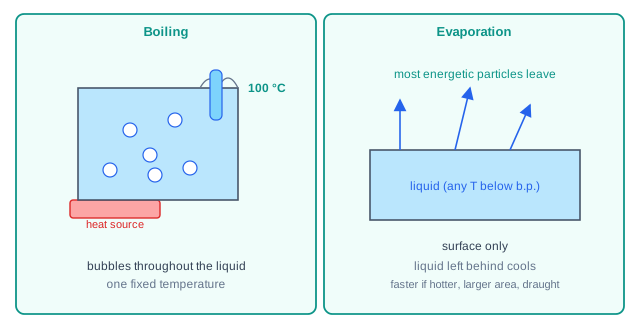
Boiling happens at a fixed temperature with bubbles throughout the liquid. Evaporation happens at the surface, at temperatures below boiling point.
Evaporation is faster if temperature is higher, surface area is larger, or air moves over the surface (draught).
An object in contact with an evaporating liquid cools because the liquid takes energy from the object.
0/10