Cambridge IGCSE Physics · 0625
Chapter 2: Thermal physics — Part 6
Topic 2.3.1 · Conduction
Good and bad conductors
Thermal conduction is energy transfer through a material without the material itself moving from place to place.
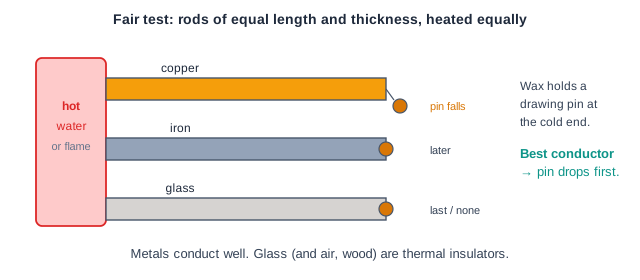
Metals are good thermal conductors. Many non-metals, liquids and gases are poor conductors (thermal insulators). Compare them experimentally with rods of equal size, equal heating, and a marker such as wax or drawing pins.
How conduction works
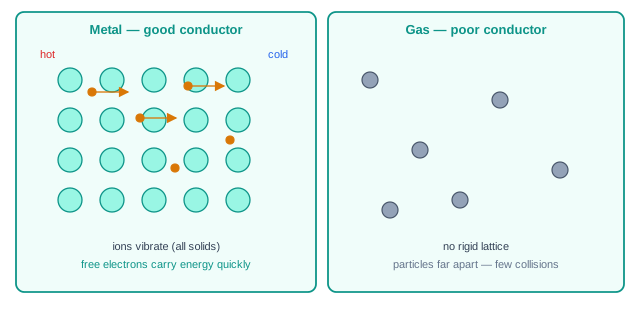
In all solids, energy is passed on by lattice vibrations.
In metals, free (delocalised) electrons also carry energy quickly, so metals conduct much better.
Gases and most liquids conduct poorly because particles are not in a rigid lattice and (in gases) are far apart.
Many solids conduct better than insulators but still much worse than good metallic conductors.
0/10