Ad Banner Placeholder
Cambridge IGCSE Physics · 0625
Chapter 2: Thermal physics — Part 7
Topic 2.3.2 · Convection
Convection in liquids and gases
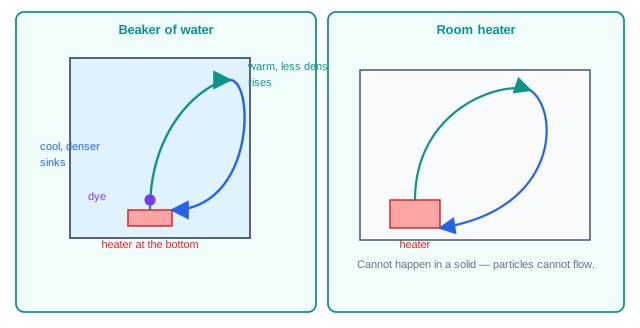
Convection is an important method of thermal energy transfer in fluids (liquids and gases). It cannot happen in a solid because the particles cannot flow.
When a fluid is heated it expands, becomes less dense, and rises. Cooler, denser fluid sinks to take its place. This circulating flow is a convection current.
Show it with potassium permanganate in heated water, or smoke over a heater / a paper-wheel above a candle.
0/10
Ad Banner Placeholder