Cambridge IGCSE Physics · 0625
Chapter 2: Thermal physics — Part 8
Topic 2.3.3 · Radiation
Infrared radiation
Thermal radiation is infrared radiation. All objects emit it.
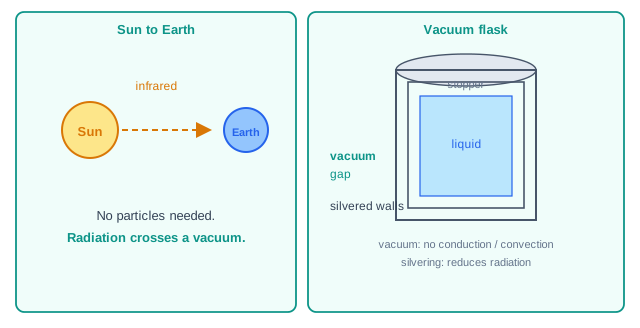
Thermal radiation does not need a medium — it can travel through a vacuum (Sun to Earth).
If an object emits energy at the same rate as it absorbs energy, its temperature is constant. If it absorbs faster than it emits, temperature rises; if it emits faster, temperature falls.
The Earth’s temperature depends on the balance between incoming radiation and radiation emitted from the surface.
Surfaces
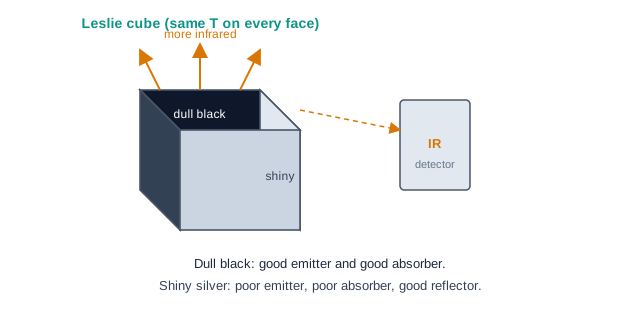
A dull black surface is a good emitter and a good absorber of infrared. A shiny white or silver surface is a poor emitter and poor absorber (it is a good reflector).
Compare emitters with a Leslie cube (equal temperatures, detector facing each face). Compare absorbers with equal cans of water, one black and one shiny, in sunlight.
Emission rate increases if the surface is hotter or has a larger area.
0/10