Cambridge IGCSE Physics · 0625
Chapter 3: Waves — Part 3
Topic 3.2.2 · Refraction of light
Refraction at a boundary
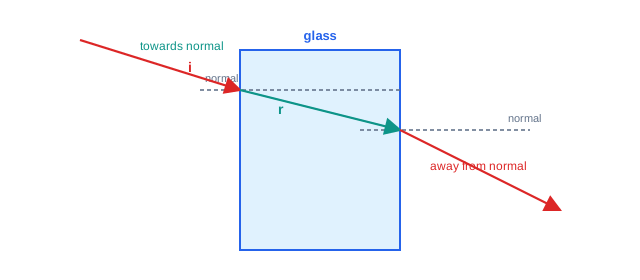
The normal, angle of incidence and angle of refraction are used at the boundary between two media.
When light goes into a denser medium (air to glass) it slows down and bends towards the normal. When it leaves into a less dense medium it speeds up and bends away from the normal.
Show this with rays through rectangular and triangular transparent blocks.
Refractive index and TIR
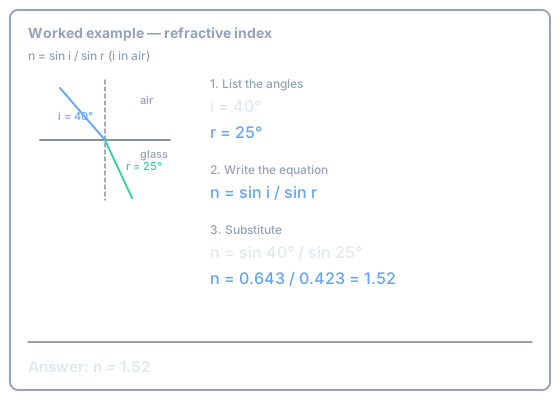
Refractive index n is the ratio of the speeds of a wave in two regions. For air to glass, n = sin i / sin r (i in air, r in glass).
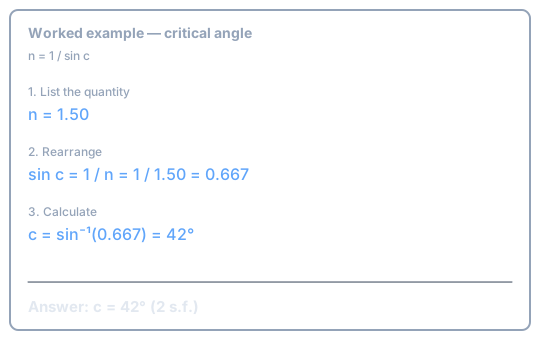
The critical angle c is the angle of incidence in the denser medium for which the refracted ray runs along the boundary (r = 90°). n = 1 / sin c.
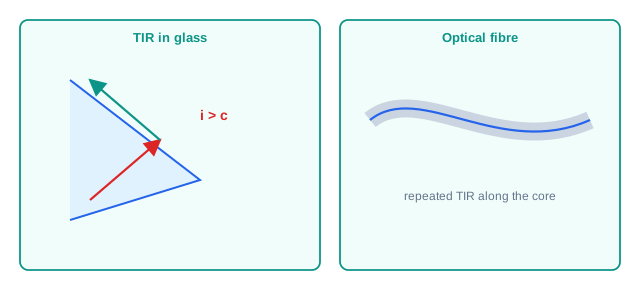
If i > c, total internal reflection (TIR) occurs. Optical fibres use TIR to carry signals (telecommunications).
A ray of light in air hits a glass block with angle of incidence 40° and angle of refraction 25°. Calculate the refractive index of the glass.
Glass has refractive index 1.50. Calculate the critical angle for light travelling in this glass towards air.
Describe TIR with a semicircular block and with everyday examples (fibre, reflecting prism).
Exam Traps
- TIR only happens when light is in the denser medium heading towards the less dense medium, with i greater than c — not from air into glass.
0/10