Cambridge IGCSE Physics · 0625
Chapter 4: Electricity and magnetism — Part 1
Topic 4.1 · Simple phenomena of magnetism
Poles and magnetic materials
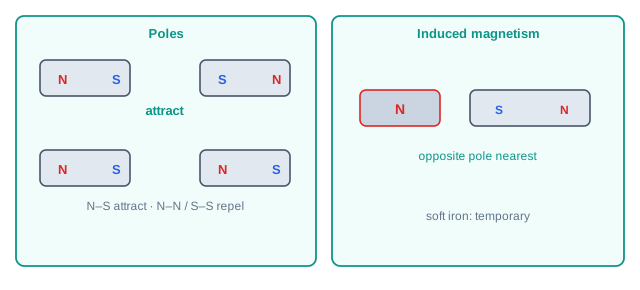
A magnet has a north pole (N) and a south pole (S).
- Unlike poles attract (N and S).
- Like poles repel (N and N, or S and S).
Magnetic materials (iron, steel, nickel, cobalt and some alloys) are attracted to a magnet. Non-magnetic materials (for example copper, aluminium, plastic, wood) are not.
A magnetic material can be magnetised (it behaves as a magnet) or unmagnetised (it is still attracted to a magnet but has no poles of its own).
Induced, temporary and permanent magnets
Induced magnetism: a magnetic material placed in a magnetic field becomes a magnet. The induced pole nearest the inducing pole is the opposite pole, so the material is attracted.
- Temporary magnets (soft iron)
- Easy to magnetise and easy to demagnetise. Used as cores in electromagnets and transformers.
- Permanent magnets (steel)
- Harder to magnetise, but they keep their magnetism. Used as compass needles, fridge magnets and the magnets in motors and loudspeakers.
Magnetic fields
A magnetic field is a region in which a magnetic pole experiences a force.
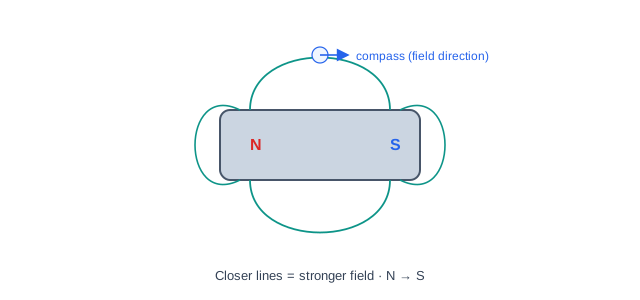
The direction of the field at a point is the direction of the force on the N pole of a magnet at that point (the direction a compass needle points).
Draw field lines around a bar magnet: they leave N and enter S, never cross, and are closer together where the field is stronger.
Plot field lines with a compass (or iron filings to show the pattern). A compass gives the direction.
Uses: permanent magnets (compass, holding, motor/loudspeaker magnets); electromagnets (lifting scrap, relays, electric bells) because they can be switched on and off.
Exam Traps
- Magnetic forces are due to interactions between magnetic fields — not contact. Closer field lines mean a stronger field, not a different kind of magnet.
0/10