Cambridge IGCSE Physics · 0625
Chapter 4: Electricity and magnetism — Part 6
Topic 4.2.5 · Electrical energy and electrical power
Energy transfer in a circuit
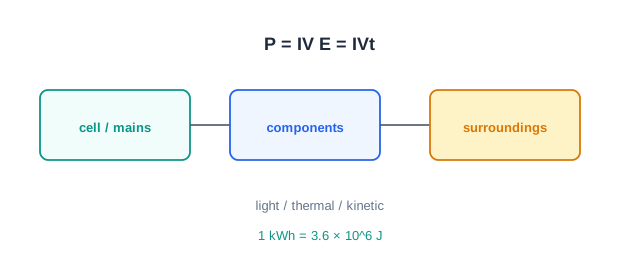
An electric circuit transfers energy from a source (cell, battery or mains) to the components, then into the surroundings (light, thermal energy, kinetic energy of a motor).
Power and energy
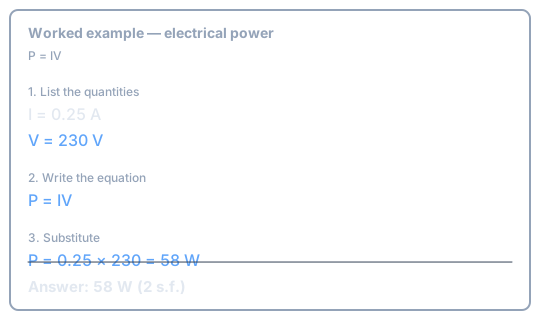
Electrical power: P = IV with P in watts (W).
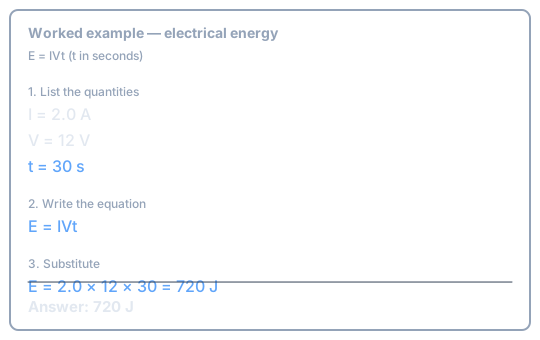
Electrical energy: E = IVt with E in joules (J) and t in seconds.
A lamp takes a current of 0.25 A from a 230 V supply. Calculate its power.
A heater takes 2.0 A from a 12 V battery for 30 s. Calculate the energy transferred.
The kilowatt-hour
The kilowatt-hour (kWh) is the energy transferred when 1 kW works for 1 hour. It is the domestic energy unit on an electricity meter.
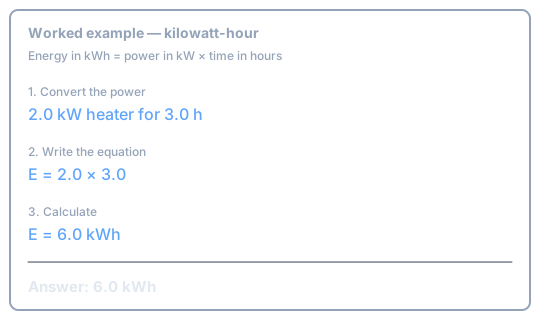
Energy in kWh = power in kW × time in hours. Cost = energy in kWh × price per kWh.
1 kWh = 3.6 × 10⁶ J (because 1000 W × 3600 s).
A 2.0 kW heater is switched on for 3.0 hours. Calculate the energy transferred, in kWh.
0/10