Cambridge IGCSE Physics · 0625
Chapter 4: Electricity and magnetism — Part 8
Topic 4.3.2 · Series and parallel circuits
Series circuits
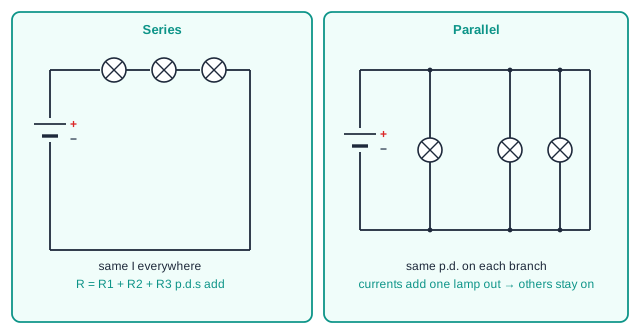
The current is the same at every point in a series circuit.
Combined e.m.f. of several sources in series: add the e.m.f.s (same orientation).
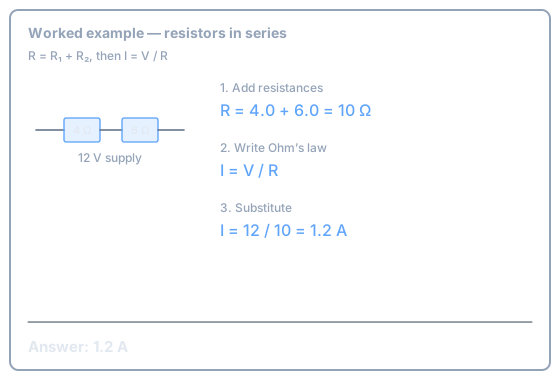
Combined resistance of resistors in series: R = R1 + R2 + …
The total p.d. across components in series equals the sum of the individual p.d.s.
A 4.0 Ω resistor and a 6.0 Ω resistor are connected in series across a 12 V supply. Calculate the current in the circuit.
Parallel circuits
The current from the source is larger than the current in each branch.
The sum of currents into a junction equals the sum of currents out of the junction.
The p.d. across parallel branches is the same.
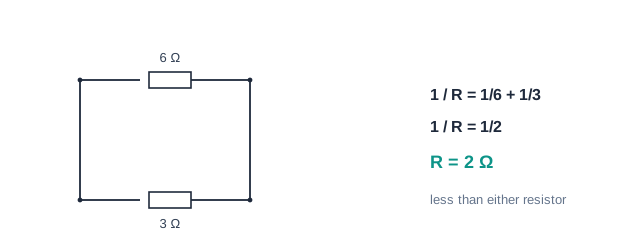
The combined resistance of two resistors in parallel is less than either resistor.
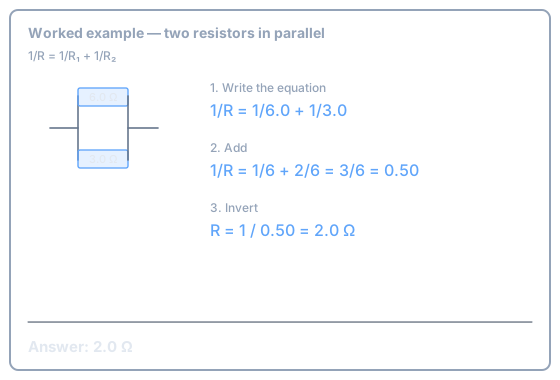
1/R = 1/R1 + 1/R2 (two resistors in parallel).
Calculate the combined resistance of a 6.0 Ω resistor and a 3.0 Ω resistor connected in parallel.
Lamps in a lighting circuit are connected in parallel so that each lamp gets the full supply p.d., they can be switched independently, and if one lamp fails the others stay on.
Exam Traps
- Do not add parallel resistances as if they were in series. Combined parallel R is smaller than the smallest branch.
0/10