Cambridge IGCSE Physics · 0625
Chapter 4: Electricity and magnetism — Part 10
Topic 4.4 · Electrical safety
Mains hazards
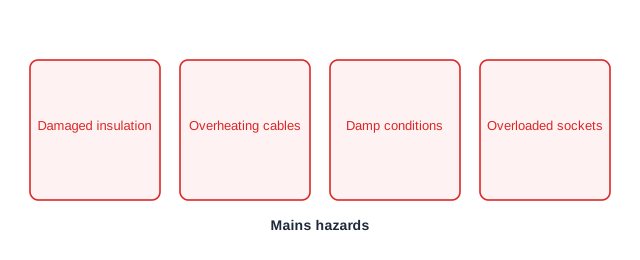
Mains hazards include:
- damaged insulation — risk of touching a live conductor
- overheating cables — from too large a current
- damp conditions — water lowers resistance, increasing shock risk
- excess current from overloaded plugs, extension leads, or too many appliances on one socket
Live, neutral, earth, fuses and trips
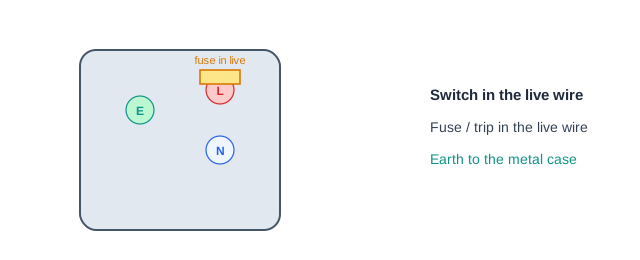
A mains circuit has a live (line) wire, a neutral wire and an earth wire.
A switch must be in the live wire so that when it is off the appliance is not still live.
A fuse (or trip switch / circuit breaker) is in the live wire. If the current is too large, the fuse melts (or the trip opens) and cuts the live supply. Choose a fuse rating a little above the normal operating current.
The metal case of an appliance must be earthed, or the case must be non-conducting (double-insulated).
If a live wire touches an earthed case, a large current flows in the earth path and the fuse blows. A fuse without an earth wire still protects the cable of a double-insulated appliance from excess current.
Exam Traps
- A fuse in the neutral leaves the appliance live if the fuse blows. The switch and fuse belong in the live wire.
0/10