Cambridge IGCSE Physics · 0625
Chapter 4: Electricity and magnetism — Part 13
Topic 4.5.3 · Magnetic effect of a current
Fields around wires and solenoids
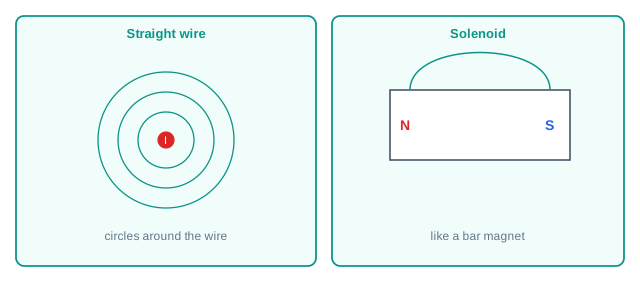
A current in a wire produces a magnetic field. Around a straight wire the field is concentric circles. Around a solenoid the field is like a bar magnet (N and S at the ends).
Plot the pattern and direction with compasses (or show the pattern with iron filings).
A larger current gives a stronger field (field lines drawn closer). Reversing the current reverses the field direction. For a solenoid, more turns also give a stronger field.
Relays and loudspeakers
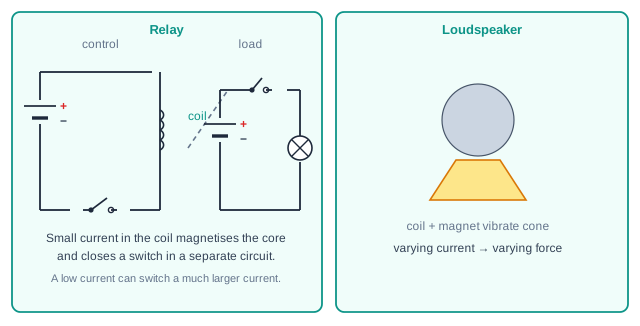
A relay uses the magnetic effect of a small current in a coil to close (or open) a switch in another circuit — for example a low-voltage circuit switching a high-current mains device.
A loudspeaker has a coil in a magnetic field attached to a cone. A varying current makes the coil (and cone) vibrate, producing sound.
0/10