Ad Banner Placeholder
Cambridge IGCSE Physics · 0625
Chapter 4: Electricity and magnetism — Part 15
Topic 4.5.5 · The d.c. motor
Turning effect on a coil
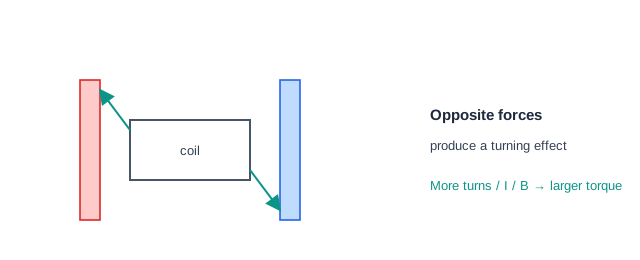
A current-carrying coil in a magnetic field can experience a turning effect (opposite forces on the two sides).
The turning effect is increased by increasing:
- the number of turns on the coil
- the current
- the strength of the magnetic field
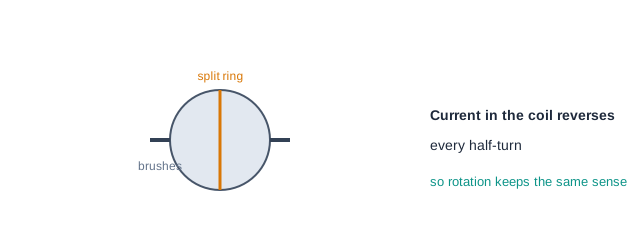
Split-ring commutator
In a d.c. motor, a split-ring commutator and brushes reverse the current in the coil every half-turn. That keeps the turning effect in the same sense, so the coil keeps rotating instead of stopping aligned with the field.
Exam Traps
- Do not confuse the split-ring commutator (d.c. motor, reverses coil current) with slip rings (a.c. generator, do not reverse the connections each half-turn).
0/10
Ad Banner Placeholder