Ad Banner Placeholder
Cambridge IGCSE Physics · 0625
Chapter 5: Nuclear physics — Part 3
Topic 5.2.1 · Detection of radioactivity
Background radiation
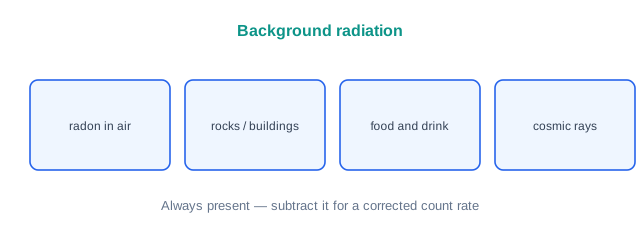
Background radiation is the ionising radiation that is always present around us.
Significant sources include:
- radon gas in the air
- rocks and buildings
- food and drink
- cosmic rays
Detectors and count rate
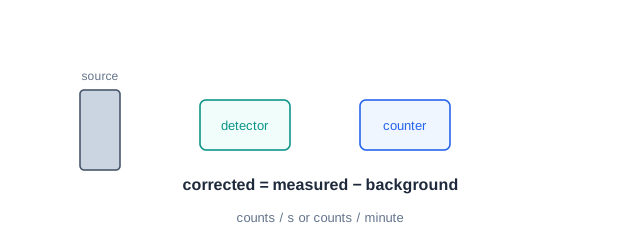
Ionising nuclear radiation can be measured with a detector connected to a counter (for example a Geiger–Müller tube).
Count rate is measured in counts per second or counts per minute.
Corrected count rate = measured count rate − background count rate. Always take a background reading with no source present.
0/10
Ad Banner Placeholder