Cambridge IGCSE Physics · 0625
Chapter 6: Space physics — Part 1
Topic 6.1.1 · The Earth
Day, night and the year
The Earth is a planet that rotates on its axis (the axis is tilted) once in about 24 hours. That explains the apparent daily motion of the Sun and the cycle of day and night.
The Earth orbits the Sun once in about 365 days. Combined with the tilt of the axis, that explains the seasons (a hemisphere tilted towards the Sun has summer).

The Moon and orbital speed
The Moon takes about one month to orbit the Earth. That explains the periodic cycle of the Moon’s phases.
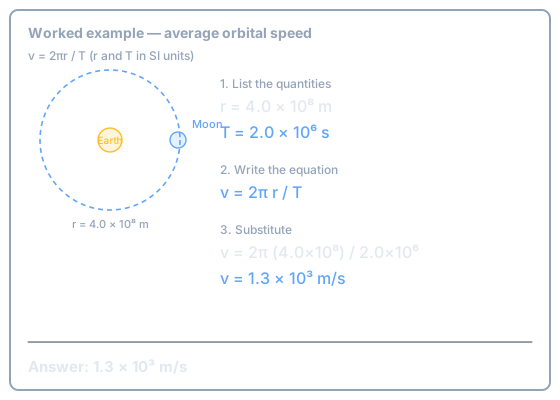
Average orbital speed: v = 2πr / T where r is the average radius of the orbit and T is the orbital period (use consistent units, e.g. metres and seconds).
A moon orbits at average radius 4.0 × 10⁸ m with period 2.0 × 10⁶ s. Calculate its average orbital speed.

0/10